

Off The Record is built on a simple idea with a lot of evidence behind it: people in high-stress work need a place to unload. But there is an important distinction the OTR model is built around. Venting and structured processing are not the same thing, and the difference decides whether a session leaves someone lighter or keeps them stuck.
The catharsis myth
There is a popular belief that anger and stress work like pressure in a container: let it out and the pressure drops. It is an intuitive idea, and for decades it shaped how people thought about "blowing off steam." The research tells a more complicated story. Studies of catharsis have repeatedly found that venting anger, whether by hitting something, rehearsing the grievance, or expressing it forcefully, does not reliably reduce it. In some cases it does the opposite, keeping arousal high and making the next flare-up more likely.
Rumination works the same way. Turning the same frustration over and over, alone or in a group that only amplifies it, tends to keep the nervous system activated. People can leave more wound up than when they arrived.
What structure changes
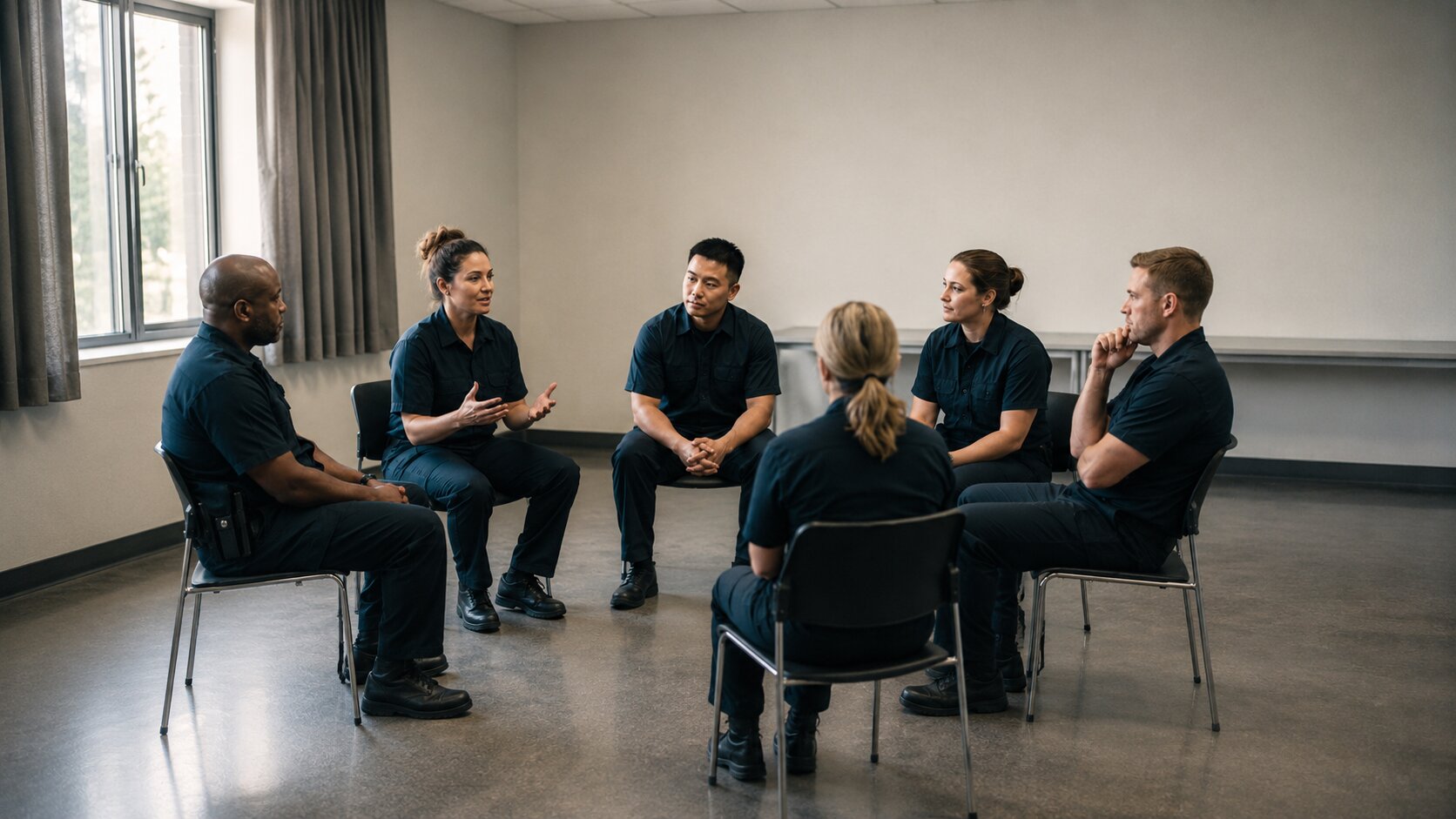
This is why unstructured ranting is not the OTR model. An OTR session is confidential, time-bounded, and led by a trained, neutral facilitator. Clear ground rules keep the conversation from turning into personal attacks, repetitive spirals, reckless talk, or a complaint meeting that goes nowhere.
The structure does something specific: it moves the conversation from release toward reflection. A good session still makes room to speak honestly and be heard, and that part matters. But it does not stop there. It moves through connection with others who understand the work, grounding, practical resources, and an appropriate close, so people leave with something more than the feeling that they just relived a bad day.
When venting helps
Talking about a hard shift with people who get it is genuinely valuable. Feeling understood reduces isolation, and isolation is one of the heaviest parts of public safety work. The point is not that venting is bad. It is that venting works best inside a container that gives it direction: a facilitator, ground rules, and a clear path from release to reflection.
Peer support as part of a bigger system
Public-safety peer-support guidance points in the same direction. Effective programs rely on specially trained peers, clear policies, strong confidentiality standards, professional referral pathways, ongoing training, and program evaluation. Peer support is positioned as one part of a broader wellness strategy, not a replacement for professional care. OTR is designed to fit that framework: structured peer connection, backed by licensed behavioral health oversight, with clear routes to professional help when it is needed.
The bottom line
Give people a place to rant and you may leave them exactly where they started. Give them structure, a neutral facilitator, ground rules, and a path from release to reflection, and the same conversation can become genuinely useful. That difference is the whole point of the OTR model.
References
- Bushman, B. J. (2002). Does venting anger feed or extinguish the flame? Catharsis, rumination, distraction, anger, and aggressive responding. Personality and Social Psychology Bulletin, 28(6), 724–731.
- International Association of Chiefs of Police (IACP). Law Enforcement Peer Support Guidelines.
- Substance Abuse and Mental Health Services Administration (SAMHSA). Peer support and behavioral health resources.